
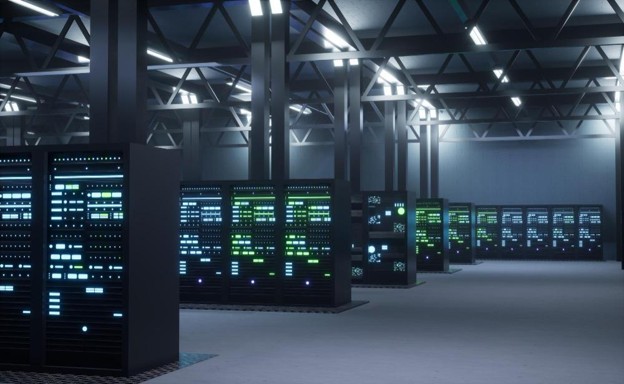
Modern enterprises need technology environments that can expand alongside business demand without compromising reliability, security, or performance. Strong data centre infrastructure gives organizations the capacity to manage growing workloads, support digital services, and create a flexible foundation for sustainable operational growth. With thoughtful planning, modern data centers can help businesses improve efficiency while preparing for future technology requirements.
Scalable Infrastructure for Growing Workloads
Enterprise workloads can change quickly as applications, users, and data volumes increase. Modern data centers provide flexible computing, storage, networking, power, and cooling capabilities, allowing businesses to expand capacity without rebuilding their entire environment. Scalable infrastructure also helps organizations manage seasonal demand, new applications, expanding digital services, and growing volumes of business information efficiently.
Key capabilities include:
- Flexible computing and storage capacity
- Modular infrastructure for phased expansion
- High-speed networking for demanding workloads
- Redundant power and cooling systems
- Centralized monitoring and management
These capabilities allow enterprises to expand infrastructure in a controlled manner while maintaining consistent performance. They also help technology teams plan investments based on actual business requirements rather than purchasing excess capacity in advance.
Efficient Operations Through Intelligent Management
Operational efficiency becomes increasingly important as enterprises manage complex technology environments. Modern data centers are incorporating automation, real-time monitoring, predictive analytics, and centralized management platforms to improve visibility across infrastructure components and simplify daily operations.
Intelligent monitoring can identify performance issues before they become major disruptions. Automated controls can optimize power consumption, cooling, workload distribution, and equipment utilization. These capabilities reduce manual intervention and enable technology teams to focus more attention on strategic initiatives, service improvements, and business priorities.
Future-Ready Infrastructure Strategies
Long-term scalability requires more than additional computing capacity. Enterprises need infrastructure strategies that can accommodate emerging technologies, evolving security requirements, changing customer expectations, and new business models. A future-ready approach considers both current requirements and the infrastructure capabilities that may be needed as operations expand.
-
Building Flexible Network Architectures
High-performance networks provide the connectivity required for cloud applications, analytics platforms, remote operations, and data-intensive workloads. Flexible network architectures allow organizations to increase bandwidth, connect new systems, and support distributed operations without creating unnecessary complexity. Reliable connectivity also improves communication between applications and infrastructure, helping businesses maintain consistent service performance.
-
Strengthening Power and Cooling Efficiency
Power and cooling directly influence data center performance, equipment reliability, and operating costs. Efficient systems help maintain suitable conditions for critical equipment while reducing unnecessary energy consumption. Intelligent cooling controls, efficient power distribution, and equipment monitoring can contribute to more stable operations while supporting broader sustainability objectives.
-
Supporting Advanced Enterprise Workloads
Artificial intelligence, machine learning, analytics, high-performance computing, and other demanding applications require substantial processing resources. Modern data centers can provide high-density computing environments designed to support these workloads while maintaining reliable performance. Scalable processing capabilities also allow businesses to introduce new technologies without placing excessive pressure on existing infrastructure.
-
Improving Infrastructure Resilience
Resilience helps organizations continue critical operations during equipment failures, power interruptions, connectivity problems, or unexpected disruptions. Redundant systems, backup resources, disaster recovery capabilities, and carefully planned maintenance procedures reduce the likelihood of extended downtime. Strong resilience protects business continuity and helps organizations maintain dependable digital services for customers and employees.
-
Enhancing Physical and Digital Security
Enterprise infrastructure must protect both equipment and the information processed within it. Access controls, surveillance, network protection, continuous monitoring, secure configurations, and identity management create multiple layers of defense around critical environments. Combining physical and digital security measures allows organizations to reduce vulnerabilities while maintaining better control over sensitive infrastructure.
-
Enabling Data Centre Cloud Convergence
The integration of physical infrastructure with cloud environments is becoming increasingly important for enterprises seeking greater flexibility. Data centre cloud convergence allows organizations to coordinate workloads across dedicated infrastructure and cloud platforms according to performance, security, cost, and business requirements. This integrated approach can provide greater workload mobility while helping businesses select the most suitable environment for different applications and data.
Balancing Infrastructure Costs With Business Value
Scalable data centers should deliver measurable business value rather than simply increasing technical capacity. Enterprises need to evaluate energy consumption, equipment utilization, maintenance requirements, workload performance, and expansion needs when planning infrastructure investments. A clear understanding of these factors helps technology leaders prioritize investments that directly support business objectives.
A well-designed environment can reduce inefficient resource use and improve the return on technology investments. Organizations can also adopt phased expansion models, allowing infrastructure spending to align with actual business growth instead of creating unnecessary capacity. This approach provides greater financial control while preserving the flexibility needed for future expansion.
Supporting Sustainable Enterprise Growth
Sustainability is becoming an important consideration in enterprise infrastructure planning. Modern data centers can incorporate energy-efficient equipment, intelligent cooling, renewable power sources, virtualization, and improved resource management practices to reduce environmental impact while maintaining operational performance.
Sustainable infrastructure can also support long-term cost management. By improving energy efficiency and monitoring resource consumption, organizations can create operations that are both environmentally responsible and financially practical. These improvements can strengthen infrastructure efficiency while helping enterprises meet evolving sustainability expectations from customers, partners, and stakeholders.
Conclusion
Modern data centers support scalable enterprise operations by combining flexible capacity, efficient management, strong resilience, advanced security, and future-ready technologies. As workloads continue evolving, organizations that regularly assess infrastructure performance and align investments with business objectives can create more agile, reliable, and efficient operating environments. A strategic approach enables enterprises to support innovation without compromising stability.
Those seeking practical insights into infrastructure innovation can connect with industry leaders, technology providers, and enterprise decision-makers at the Datacentre & Cloud Infrastructure (DCCI) Expo in Malaysia. The platform offers valuable opportunities to explore emerging solutions, exchange knowledge, and understand how data centre cloud convergence can support scalable, efficient, secure, and future-ready enterprise operations.