
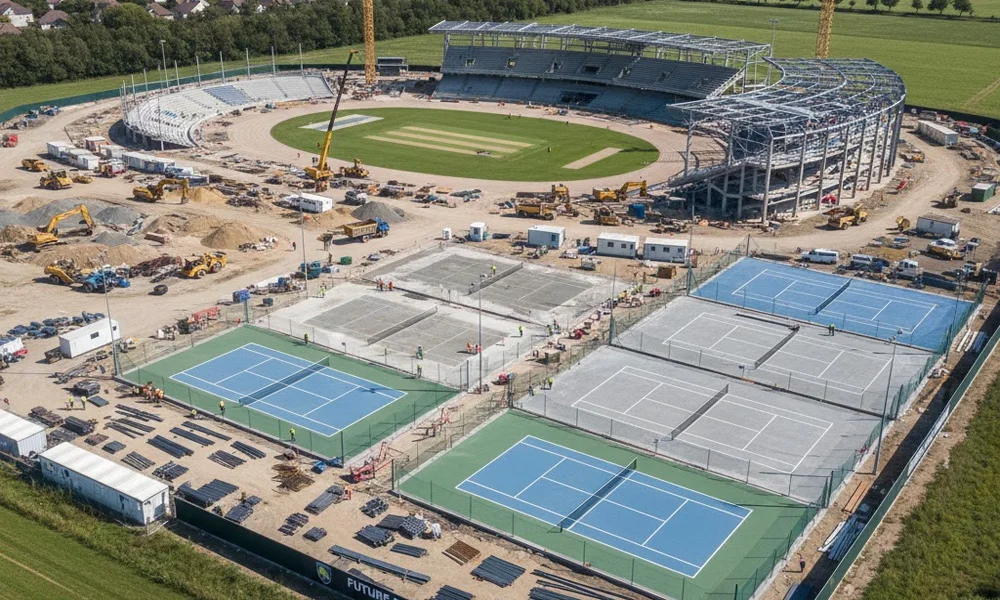
Sports venues are no longer planned only around seating capacity, playing surfaces, and spectator facilities. Environmental performance has become an important part of modern stadium development, influencing everything from energy consumption and water management to materials, mobility, and long-term operations.
As cities invest in larger and smarter sporting facilities, sports infrastructure solutions are increasingly being shaped around sustainability, efficiency, resilience, and better resource management. The goal is to create venues that support sporting events while also responding to changing environmental expectations and urban needs.
Energy Efficiency Becomes a Core Planning Priority
Energy management is a key part of sustainable stadium planning, helping venues reduce consumption while improving operational efficiency. Modern facilities can combine renewable energy systems with efficient technologies to lower their environmental impact.
Solar microgrids can support local power generation while improving energy resilience during events. Energy-efficient LED lighting, smart building controls, efficient HVAC systems, and automated monitoring can further minimise unnecessary consumption.
Sensors can track occupancy and adjust lighting, ventilation, or cooling according to real-time requirements. This prevents energy from being wasted in unused areas and supports better resource management.
By integrating these technologies from the planning stage, stadiums can become more efficient, resilient, and environmentally responsible while maintaining comfortable conditions for visitors.
Water Management Is Becoming More Strategic
Water is another major consideration in sustainable sports infrastructure planning. Stadiums may require water for landscaping, sanitation, cleaning, food services, cooling systems, and maintaining playing surfaces.
Water recycling can reduce dependence on fresh water supplies by allowing treated water to be reused for suitable applications. Rainwater harvesting can also help capture precipitation and reduce pressure on municipal systems.
Landscape planning plays an important role as well. Selecting climate-appropriate plants and efficient irrigation methods can reduce unnecessary water consumption while maintaining attractive public spaces.
These measures demonstrate how sustainability can become part of everyday venue operations rather than remaining a separate environmental initiative.
Designing Stadiums for Multiple Uses
A sustainable stadium should ideally generate value beyond a limited number of sporting events. Multi-purpose venue design is therefore becoming increasingly important.
A facility that can accommodate sporting competitions, cultural events, entertainment programmes, conferences, and community activities can remain useful throughout the year. Higher utilisation means that the infrastructure serves more people and creates greater value from the resources invested in construction.
Flexible seating, adaptable interiors, modular spaces, and efficient circulation can make it easier to change the venue according to event requirements. Such planning can also reduce the need to construct separate facilities for different purposes.
Smart Technology Supports Sustainable Operations
Sustainability and digital technology are becoming increasingly connected. A smart venue can use data to understand how different systems perform and where resources are being consumed.
IoT sensors can monitor temperature, occupancy, energy use, water consumption, equipment performance, and other operational conditions. Analytics can then help facility teams identify inefficiencies and respond before small problems become expensive issues.
This approach can also support better crowd management. Intelligent systems can help operators understand movement patterns and manage facilities according to real-time conditions. The summit’s focus includes stadium connectivity, crowd intelligence, AI surveillance, smart ticketing, and contactless access alongside environmental technologies.
Materials and Construction Need Long-Term Thinking
Sustainable planning does not stop once the building is operational. Material selection during construction can influence environmental impact, maintenance requirements, durability, and future adaptability.
Architects and engineers can consider locally appropriate materials, durable construction methods, responsible sourcing, efficient structural systems, and designs that minimise waste. Materials that require frequent replacement can increase both operational costs and environmental impact over time.
Designing for maintenance is equally important. Accessible mechanical systems, replaceable components, and adaptable spaces can extend the useful life of a venue and reduce the need for major reconstruction.
A sustainable stadium is therefore not necessarily defined by one feature. It is the result of multiple decisions made across the entire project lifecycle.
Climate-Responsive Design Improves Resilience
Sports venues must respond to local environmental conditions. Heat, rainfall, humidity, air quality, and extreme weather can affect both spectators and infrastructure.
Climate-responsive design can include natural ventilation strategies, shading structures, efficient building envelopes, heat-reducing surfaces, appropriate orientation, and weather-resistant materials. These features can improve comfort while reducing dependence on mechanical cooling.
The importance of climate responsiveness is becoming even more apparent as stadiums are increasingly viewed as civic assets rather than isolated sporting facilities. The summit highlights the need for venues to become accessible, flexible, and climate-responsive as India prepares for a growing sports economy.
Green Certifications Can Guide Development
Sustainability goals become easier to manage when developers have measurable standards to follow. Green building certifications can provide frameworks for evaluating energy efficiency, water management, materials, indoor environments, and operational performance.
The summit specifically identifies GreenCo certification among its sustainability-related discussion areas. Certification can also help project stakeholders establish clear environmental targets and demonstrate progress.
Importantly, certification should support genuine performance rather than become the sole objective. The most effective approach is to integrate environmental thinking into planning, construction, commissioning, and daily operations.
Why Collaboration Is Essential
Sustainable stadium development involves many stakeholders. Architects, engineers, venue operators, government agencies, technology providers, sports organisations, and urban planners all influence how a project develops.
Industry conferences can help these groups exchange knowledge about emerging technologies, operational challenges, design practices, and infrastructure requirements. The summit brings together sectors including stadium operators, sports clubs, governing bodies, government organisations, smart-city agencies, architecture and engineering firms, broadcasters, OTT platforms, and fan engagement providers.
The sports infrastructure conference India ecosystem therefore has an important role in encouraging collaboration between professionals shaping the next generation of venues.
Conclusion
Sustainable sports venues can deliver more than environmental benefits. They can improve operational efficiency, reduce resource consumption, support flexible use, enhance resilience, and create better experiences for visitors and communities. As stadium development becomes smarter and more environmentally conscious, sports infrastructure solutions will play an increasingly important role in creating venues designed for long-term performance and responsible growth.
Professionals can explore emerging ideas, technologies, and opportunities at Smart Stadiums & Sports Infra Summit. It brings industry professionals together through a conference, exhibition, and awards platform focused on stadium connectivity, crowd intelligence, AI safety, smart ticketing, solar microgrids, water recycling, GreenCo certification, and multi-purpose venue design. The event also provides opportunities for sponsorship, speaking, networking, knowledge exchange, and exploring emerging sports infrastructure trends.